I spent several years working alongside indoor air quality inspectors before I started writing about home health full-time, and one appliance homeowners often underestimate is the aging gas range.
If you have a gas stove that has been in your kitchen for 10 or 15 years, its age alone does not mean you need to replace it. What matters is how the range is operating. A burner that suddenly produces a yellow flame, leaves soot on your cookware, struggles to ignite, or gives off a gas odor may need cleaning, repair, or professional inspection.
These changes matter for more than cooking performance. Gas ranges produce combustion byproducts every time they operate. When the appliance is functioning properly and the kitchen is adequately ventilated, those pollutants can be reduced or removed. However, when combustion or ventilation problems develop, they can worsen indoor air quality.
Key Takeaways
- An older gas range is not automatically unsafe. Its condition and how well it is operating matter more than its age alone.
- Gas cooking can produce combustion byproducts such as nitrogen dioxide (NO2) and carbon monoxide (CO).
- A yellow or orange flame, soot, repeated ignition problems, or an unstable flame can indicate that a burner needs attention.
- Good kitchen ventilation can help reduce the buildup of cooking-related pollutants indoors.
- Using an outdoor-vented range hood, keeping burners clean, and maintaining a working carbon monoxide detector can improve kitchen safety.
- A persistent gas odor should never be treated as normal. Follow your local gas utility’s emergency guidance and have the problem addressed promptly.
- You do not necessarily need to replace an older range. A professional inspection can help determine whether a maintenance issue or worn component is causing the problem.
How a Gas Range Affects Indoor Air Quality
A gas burner burns fuel to produce heat, and that combustion produces more than just a cooking flame. Nitrogen dioxide (NO2) and carbon monoxide (CO) are among the combustion byproducts associated with gas cooking. Other compounds, including formaldehyde, can also be produced in smaller amounts.
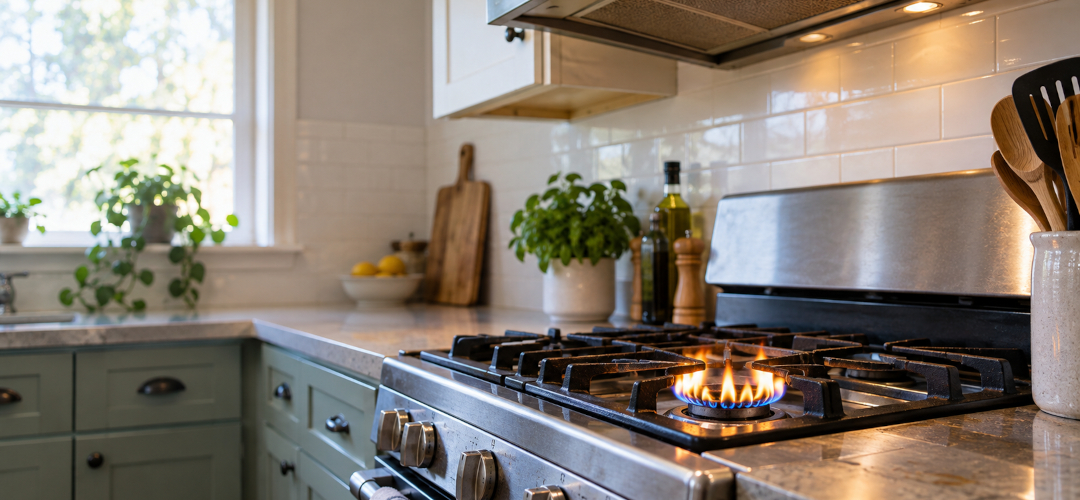
A properly operating burner should have a steady blue flame. Problems with burner ports, components, or combustion conditions can interfere with normal operation. You may notice an uneven flame, a change in flame color, delayed ignition, or soot around the burner.
Appliance problems can affect more than a kitchen’s smell or an appliance’s performance. Water leaks from refrigerators, dishwashers, and other appliances can create a separate indoor health concern when moisture remains hidden beneath flooring. Learn more about hidden mold from appliance leaks and the risks that can develop when water damage goes unnoticed.
Ventilation is another important part of the equation. Research has found that homes with gas cooking appliances can have higher indoor nitrogen dioxide levels than homes without them. When a kitchen has limited ventilation, cooking-related pollutants have fewer opportunities to leave the room.
This is particularly important in homes where the range is used frequently or where the kitchen has limited airflow.
Why Kitchen Ventilation Matters
Your range hood can play an important role in removing pollutants generated while you cook. If the hood vents outdoors, it can move air and cooking byproducts out of the home. A recirculating hood filters and returns air to the kitchen, so it doesn’t provide the same outdoor exhaust.
I notice the ventilation issue most during colder months. Homeowners naturally keep windows closed when temperatures drop, which can reduce fresh-air exchange. If the stove runs regularly, combustion byproducts and other cooking pollutants can remain indoors longer.
You don’t have to make cooking complicated. Make ventilation part of your normal routine. Use the range hood when you cook, and when appropriate, bring in some fresh air through a window or another ventilation method.
Signs Your Gas Range May Need Attention
Your gas range can give you several clues when something isn’t operating normally.
Watch for:
- A yellow or orange flame instead of a steady blue flame
- Soot on pots, pans, or surfaces around the range
- A persistent gas odor when the burners are off
- Burners that take longer than usual to ignite
- Uneven or inconsistent heating
- A flame that flickers or will not remain steady
- A pilot light that repeatedly goes out on models that use one
A single issue does not automatically mean the range needs to be replaced. For example, food debris or a clogged burner port may interfere with the flame and require relatively simple maintenance.
The important part is recognizing a change from normal operation. If your burner has always produced a steady blue flame and suddenly begins burning yellow, that change deserves attention. If the problem persists after basic cleaning, same-day appliance repair can help identify whether the issue involves the burner, ignition system, or another component.
A persistent gas smell is different. If you smell gas, follow your local gas utility’s emergency instructions and avoid anything that could create an ignition source. Do not treat a continuing gas odor as a routine maintenance problem.

Who May Be More Sensitive to Indoor Air Pollutants?
Indoor air pollutants can affect people differently. Children, older adults, and people with asthma or other respiratory conditions may be more sensitive to some indoor pollutants.
That does not mean an older gas range automatically creates a health hazard. It does mean that keeping the appliance in good working condition and reducing unnecessary pollutant buildup are sensible precautions, particularly in households where someone may be more sensitive to indoor air pollution.
Simple Ways to Improve Indoor Air Quality While Cooking
You do not necessarily have to replace an older gas range to improve the air in your kitchen. Start with the basics.
Use the range hood
Turn on the hood whenever you use the gas burners rather than waiting until smoke or strong odors appear. If it vents outdoors, run it while you cook and for a short period afterward, when practical.
Bring in fresh air when appropriate
Opening a window can improve air exchange when conditions allow. This can be particularly useful in kitchens with limited ventilation.
During colder weather, you may not want to leave a window open for long. Even so, brief ventilation may help when practical.
Keep the burners clean
Food debris and buildup can interfere with burner operation. If the flame becomes uneven or changes color, clean the components according to the manufacturer’s instructions and have the appliance inspected if the problem continues.
Keep a working carbon monoxide detector in your home
A carbon monoxide detector provides an important safety layer in homes with fuel-burning appliances. Install and maintain detectors according to the manufacturer’s instructions and local safety guidance, and test them regularly.
A detector is not a substitute for appliance maintenance, but it is an important part of household safety.
Never use the gas oven as a room heater
A gas oven is designed for cooking, not heating a home. Using it to warm a room can create dangerous conditions if combustion gases accumulate indoors.
If your home is cold, use the heating system intended for that purpose.
What I’ve Seen With Aging Gas Ranges in Asheville, NC
In my experience, the biggest problem is often not the appliance’s age. It is how long homeowners wait after noticing something unusual.
A burner can still produce heat even when it is not operating the way it should. That makes it easy to dismiss a yellow flame, soot, or inconsistent ignition as a minor inconvenience.
I remember a neighbor whose range had been producing a yellow flame for several weeks. She assumed that was simply how the burner looked. After I pointed out that a change in flame color can indicate a combustion or burner problem, she had it checked.
The technician found corrosion in the burner assembly and replaced the damaged component. She chose Appliance EMT for the repair, and they diagnosed and repaired the range that afternoon.
It wasn’t a major repair, but the situation reminded me that a functioning appliance isn’t always operating normally. Catching a problem early can prevent a small maintenance issue from becoming a larger repair.
When Should You Call for Gas Range Repair?
Some problems can be addressed through routine cleaning, but persistent or unusual symptoms deserve professional attention.
Consider contacting a qualified appliance technician if you notice:
- A persistent gas odor
- Yellow or unusually orange flames
- Repeated ignition problems
- Soot around the appliance
- A burner that will not maintain a steady flame
- A pilot light that repeatedly goes out
- A noticeable change in the way the range operates
A technician can determine whether the problem involves the burner assembly, ignition system, another component, or something that affects combustion.
If the range continues to show unusual symptoms after cleaning, don’t assume the problem will correct itself just because the appliance is still producing heat.
Frequently Asked Questions
Can a gas range cause carbon monoxide poisoning?
A malfunctioning or improperly vented fuel-burning appliance can contribute to dangerous carbon monoxide levels. Incomplete combustion can increase carbon monoxide production, while inadequate ventilation can allow it to accumulate indoors.
A working carbon monoxide detector is an important safety measure, but it should not replace proper appliance maintenance.
Is it safe to keep cooking on an older gas range?
Age by itself does not determine whether a gas range is safe to use. A properly maintained, properly operating older range may continue to work for years.
What matters is how the appliance is performing. Yellow flames, soot, persistent gas odors, unreliable ignition, or an unstable flame are reasons to have the range inspected.
How often should an older gas range be inspected?
No single inspection schedule applies to every gas range. Follow the manufacturer’s maintenance recommendations, and schedule an inspection if you notice changes in burner performance or other warning signs.
An older appliance may also deserve closer attention as components begin to wear.
Does an electric range eliminate this particular indoor air quality concern?
Electric ranges do not produce combustion byproducts from burning natural gas because no gas combustion takes place at the cooktop.
However, switching to an electric range does not eliminate the need for kitchen ventilation. Cooking can still produce smoke, grease, odors, and airborne particles.
What’s the difference between a yellow flame and a blue flame?
A steady blue flame generally indicates that the burner is operating under appropriate combustion conditions.
A yellow or orange flame can indicate incomplete combustion or another burner problem. If a flame that normally burns blue suddenly changes color, have the burner cleaned or inspected rather than assuming the change is normal.
What Homeowners Should Know
An older gas range is not automatically a problem. What matters is how it operates and how well your kitchen handles the pollutants produced during cooking.
Pay attention when a familiar burner starts behaving differently. A change in flame color, soot around the range, repeated ignition problems, or an unusual gas odor should not become something you simply learn to live with.
Use your range hood, maintain the burners, keep a working carbon monoxide detector in the home, and address unusual symptoms early. The goal is not to replace every aging gas range. It is to keep the appliance operating properly while giving combustion byproducts a way to leave the kitchen.