I started paying closer attention to medication storage after a family member’s insulin stopped working as expected. It wasn’t expired, and the dosage hadn’t changed. The problem turned out to be a refrigerator that was running a few degrees warmer than anyone realized. That’s one of the medication storage mistakes.
That experience taught me an important lesson. A refrigerator can seem to work perfectly while exposing medications to temperatures that reduce their effectiveness. Since then, I’ve encouraged friends and neighbors in Marietta to check the actual temperature of their refrigerators instead of assuming everything is fine.
If you store insulin, biologics, certain antibiotics, eye drops, or other temperature-sensitive medications, proper storage matters. Even small temperature fluctuations can affect some medications before any obvious signs of a problem appear.
Key Takeaways
- Temperature-sensitive medications can lose effectiveness after repeated warming and cooling.
- Refrigerator door shelves are one of the warmest and least stable places to store medication.
- An appliance thermometer is the easiest way to verify safe storage temperatures.
- Marietta’s summer heat and occasional power outages can make refrigerators work harder.
- Catching cooling problems early is often far less expensive than replacing costly medications.
Which Medications Need Refrigeration?
Not every prescription belongs in the refrigerator, but many do. Some of the most common examples include:
- Insulin
- Certain biologic medications
- Some liquid antibiotics
- Certain eye and ear drops
- Some hormone and fertility medications
Not all medications have the same storage requirements. For example, most EpiPens should be stored at room temperature rather than refrigerated. Always follow the instructions on the prescription label or ask your pharmacist if you’re unsure.
Why Refrigerator Temperature Matters
Many people assume their refrigerator is working because their food still feels cold. Unfortunately, medication storage isn’t that simple.
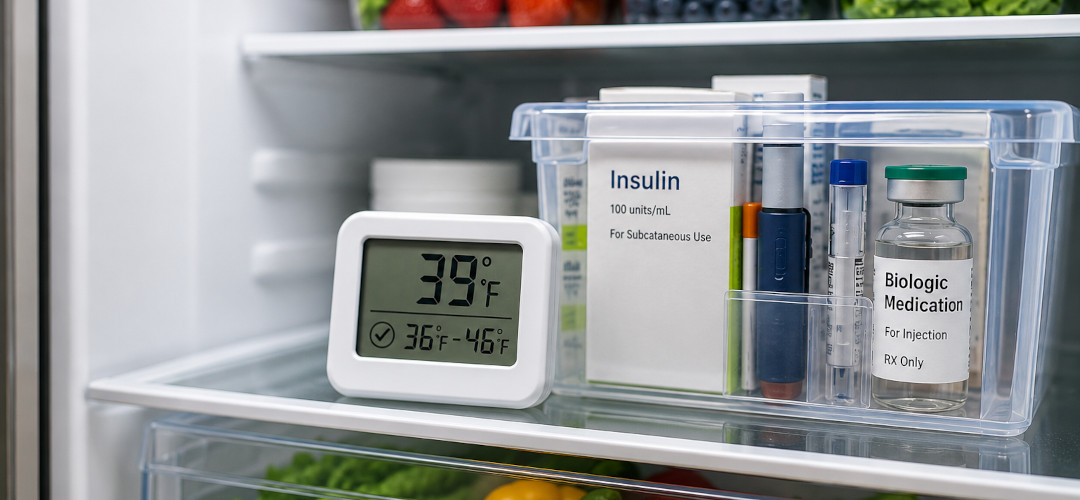
Most refrigerated medications should be kept between 36°F and 46°F (2°C to 8°C) unless the manufacturer or your pharmacist provides different instructions. Temperatures outside that range can reduce the effectiveness of certain medications, even if they still look normal.
A refrigerator that isn’t maintaining the proper temperature doesn’t just put medications at risk. It can also shorten the shelf life of fresh foods and make it harder to maintain healthy eating habits. If you’re interested in the broader impact of refrigerator performance, read our guide on why your fridge might be sabotaging your healthy eating habits and goals.
One of the biggest mistakes is storing medication in the refrigerator door. Every time the door opens, those shelves warm up much faster than the interior, exposing medications to repeated temperature changes throughout the day.
Signs Your Refrigerator May Have a Cooling Problem
A refrigerator doesn’t have to stop working completely before it puts medications at risk. Watch for warning signs such as:
- Frequent compressor cycling
- Condensation inside the refrigerator
- Food freezing near the back while other items feel warmer
- Unusual noises
- Inconsistent temperatures from one shelf to another
If you notice these problems, it’s worth having the refrigerator inspected before the medication is affected. I’ve recommended Appliance EMT to several homeowners because they can quickly identify cooling issues. Scheduling a refrigerator repair in Marietta is often much less expensive than replacing insulin or other refrigerated prescriptions.

How to Store Medications Safely
Protecting refrigerated medications only takes a few simple habits.
- Place an appliance thermometer on the middle shelf.
- Check the temperature over several days.
- Store medications on an interior shelf instead of the door.
- Keep the refrigerator between 36°F and 46°F unless your medication label says otherwise.
- After a prolonged power outage, contact your pharmacist if you’re unsure whether refrigerated medications are still safe to use.
These small steps can help identify cooling problems long before spoiled food provides any warning.
Why This Matters in Marietta
Marietta’s hot, humid summers force refrigerators to work harder, especially older units. During heat waves, aging compressors may struggle to maintain consistent temperatures, while summer storms can cause brief power outages that raise internal temperatures without homeowners realizing it.
Checking your refrigerator before the hottest months of the year can help prevent unexpected problems with temperature-sensitive medications.
Common Medication Storage Mistakes
The mistakes I see most often include:
- Assuming the refrigerator is cold enough because the food seems fine.
- Keeping medications in the refrigerator door.
- Ignoring unusual noises or inconsistent cooling.
- Waiting until medication may have been compromised before checking the temperature.
- Assuming temperature damage will always be visible.
A simple appliance thermometer can prevent many of these problems.
Frequently Asked Questions
How can I tell if my refrigerator is cold enough?
The most reliable method is to place an appliance thermometer on the shelf where medications are stored. Built-in temperature settings don’t always reflect the actual temperature inside the refrigerator.
What should I do if my refrigerator gets too warm?
Contact your pharmacist before using temperature-sensitive medications. Different medications can tolerate temperature changes for different lengths of time.
How often should I check my refrigerator?
I recommend checking it regularly throughout the year and paying extra attention before summer begins. If you notice inconsistent cooling or unusual noises, schedule an inspection promptly.
Safe Medication Storage Starts With Your Refrigerator
Medication storage is easy to overlook until something goes wrong. My family’s experience showed me that even a refrigerator that appears to be working normally can expose medications to unsafe temperatures.
Using an appliance thermometer, storing medications on an interior shelf, and paying attention to early warning signs can help protect insulin, biologics, and other temperature-sensitive prescriptions. In Marietta, where summer heat places extra strain on refrigerators, these simple habits can help keep both your appliance and your medications performing as they should.