Most business owners take food safety seriously.
Restaurants monitor food temperatures. Hotels follow sanitation procedures. Healthcare facilities enforce strict hygiene protocols. Even office buildings and fitness centers typically maintain regular cleaning schedules.
Yet one piece of equipment is frequently overlooked despite being used every day: the commercial ice machine.
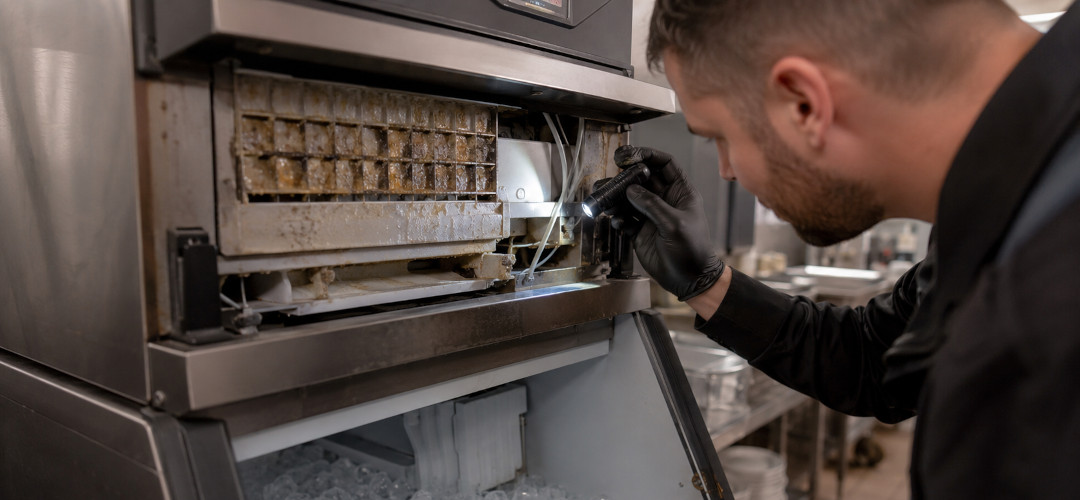
Over the years, I’ve inspected facilities that maintained spotless kitchens and consistently passed health inspections, only to discover significant contamination hidden inside their ice machines. In many cases, managers were surprised because the equipment appeared to be functioning perfectly. Ice production was normal. Temperatures were correct. There were no obvious warning signs.
The problem is that contamination often develops long before anyone notices it.
According to FDA food safety guidelines, ice is considered a food product. That means commercial ice machines should receive the same level of sanitation and maintenance attention as any other food-contact surface.
When neglected, these machines can become breeding grounds for bacteria, mold, biofilm, and mineral buildup that may ultimately affect the people consuming the ice.
For businesses evaluating new equipment, understanding contamination risks can also help answer an important question: which is the best commercial ice machine for maintaining food safety standards and reducing maintenance challenges over time?
Key Takeaways
- Ice is classified as a food and should be treated accordingly.
- Commercial ice machines can harbor mold, bacteria, biofilm, and mineral deposits.
- Contaminated ice has been linked to outbreaks involving norovirus, Salmonella, E. coli, and other pathogens.
- Freezing temperatures do not automatically kill harmful microorganisms.
- High-volume commercial environments increase contamination risks.
- Preventive maintenance is significantly less expensive than dealing with health violations, customer complaints, or equipment failures.
- Regular cleaning, sanitizing, and documentation help protect both customers and businesses.
Why Commercial Ice Machines Are Vulnerable to Contamination
Commercial ice machines operate under ideal conditions for microbial growth.
Unlike residential units, commercial machines often run continuously throughout the day. Restaurants, bars, hotels, hospitals, and event venues may produce hundreds of pounds of ice daily.
This constant operation creates an environment with:
- Continuous moisture
- Consistent water flow
- Humidity
- Dark interior spaces
- Limited airflow
These conditions allow microorganisms to establish themselves on internal components such as:
- Water reservoirs
- Distribution tubes
- Evaporator plates
- Ice storage bins
- Drain systems
- Door gaskets
One of the most concerning aspects of contamination is that it often remains hidden. A machine can continue producing clean-looking ice while bacteria and biofilm develop inside areas that operators rarely inspect.
Common Contaminants Found in Commercial Ice Machines
Biofilm
Biofilms are among the most common and dangerous contaminants found in commercial ice equipment.
Biofilm forms when microorganisms attach to a surface and produce a protective layer that shields them from normal cleaning efforts. Once established, biofilm can spread throughout internal water systems and become difficult to remove without proper sanitizing procedures.
During service inspections, technicians frequently discover biofilm in water lines and reservoirs that appear clean from the outside.
The challenge is that biofilm often develops out of sight long before visible symptoms emerge.
Mold and Slime Growth
Mold thrives in damp environments, making commercial ice machines particularly susceptible.
Common signs include black, pink, orange, or green residue around:
- Ice storage bins
- Door seals
- Dispensing mechanisms
- Interior panels
While some operators view mold as a cosmetic issue, it can create health concerns for customers with allergies, asthma, respiratory conditions, or weakened immune systems.
This risk becomes even more significant in hospitals, healthcare facilities, and senior living communities.
Mineral Scale and Hard Water Deposits
Hard water introduces minerals such as calcium and magnesium into the machine.
Over time, these minerals accumulate and form scale deposits on internal surfaces. Scale not only reduces efficiency but also creates rough surfaces where bacteria and biofilm can attach more easily.
When scale buildup and microbial contamination occur together, cleaning becomes far more difficult and expensive.
How Contaminated Ice Can Make People Sick
Many people assume ice is naturally safe because it is frozen.
Unfortunately, freezing temperatures do not automatically eliminate all harmful microorganisms.
Contamination typically follows a simple pathway:
- Bacteria, mold, or viruses establish themselves inside the machine.
- Ice forms on contaminated surfaces or comes into contact with contaminated water.
- Customers consume the ice directly or through beverages.
- Exposure may lead to illness.
Unlike cooked foods, ice receives no heat treatment before consumption.
As a result, any contamination present when the ice leaves the machine can reach the customer.
Food safety depends on more than clean ice. Temperature control and proper refrigeration practices also play a major role in protecting food quality and consumer health. In fact, many businesses overlook how refrigeration performance can affect freshness, contamination risks, and overall food safety throughout their operations.
Food safety investigations have linked contaminated ice to outbreaks involving:
- Norovirus
- Salmonella
- E. coli
- Listeria monocytogenes
These pathogens can cause severe illness, especially among:
- Children
- Older adults
- Pregnant women
- Immunocompromised individuals
Warning Signs Your Ice Machine Needs Immediate Attention
Contamination does not always produce visible symptoms, but several warning signs should never be ignored.
Watch for:
- Black, pink, or orange residue
- Slimy interior surfaces
- Musty or unusual odors
- Cloudy ice
- Ice with an unusual taste
- Reduced ice production
- Excessive mineral scale
- Water leaks
- Unusual noises during operation
If any of these symptoms appear, cleaning and inspection should occur immediately.

Industries With the Highest Exposure Risk
Restaurants and Bars
Restaurants and bars often handle large volumes of ice while maintaining constant employee interaction with storage bins and scoops.
This combination significantly increases contamination opportunities.
Hotels and Hospitality Facilities
Guest ice machines may serve hundreds of people weekly while receiving less attention than kitchen equipment.
A single contamination incident can quickly generate negative reviews and reputational damage.
Hospitals and Medical Clinics
Healthcare facilities serve individuals who may already have compromised immune systems.
Even minor contamination can create serious consequences in these environments.
Fitness Centers
Many gym members consume large quantities of ice in beverages, protein shakes, and recovery drinks.
Consistent sanitation is essential to maintaining member safety.
Office Buildings
Office ice machines frequently experience periods of inactivity during weekends and holidays.
Stagnant water conditions can encourage bacterial growth if maintenance is neglected.
The Financial Cost of Ice Machine Contamination
Health concerns are only one part of the equation.
Businesses may also face substantial financial consequences.
A contamination incident can result in:
- Health department violations
- Failed inspections
- Emergency service calls
- Product loss
- Negative online reviews
- Customer complaints
- Lost business
- Increased insurance costs
- Legal liability
Consider the difference between preventive maintenance and reactive repairs:
| Preventive Maintenance | Contamination Incident |
| Scheduled cleaning costs | Emergency service expenses |
| Planned downtime | Unexpected business disruption |
| Routine inspections | Health department investigations |
| Predictable expenses | Potential legal claims |
| Customer confidence | Reputational damage |
In nearly every situation, prevention costs far less than remediation.
Commercial Ice Machine Cleaning Best Practices
The most successful operators rely on documented maintenance programs rather than waiting for visible problems.
For businesses that depend on a steady supply of safe, sanitary ice, partnering with experienced commercial appliance service providers such as Appliance EMT can help ensure equipment receives the regular inspections, cleaning, and preventive maintenance necessary to reduce contamination risks and avoid costly disruptions.
Recommended Cleaning Schedule
- Full cleaning and sanitizing every 30 to 90 days
- Weekly visual inspections
- Water filter replacement every six months or according to manufacturer recommendations
- Annual professional inspections
- Semi-annual professional service for high-volume operations
Recommended Cleaning Procedure
- Turn off the machine.
- Remove and discard all existing ice.
- Apply an NSF-approved cleaner.
- Clean reservoirs, evaporator plates, water lines, bins, and gaskets.
- Run the manufacturer’s cleaning cycle.
- Apply an approved food-safe sanitizer.
- Perform multiple rinse cycles.
- Resume operation.
- Document all maintenance activities.
Maintaining detailed cleaning logs can prove invaluable during inspections or investigations.
Monthly Ice Machine Safety Checklist
Use this checklist to help identify developing issues before they become major problems:
□ Inspect ice bin interior
□ Check door gaskets for mold or damage
□ Verify water filter condition
□ Remove visible scale buildup
□ Confirm proper drainage
□ Inspect dispensing components
□ Review maintenance records
□ Schedule professional service if needed
Why Georgia Businesses Face Greater Challenges
Businesses throughout Georgia face unique environmental conditions that accelerate contamination risks.
The region’s long periods of heat and humidity create ideal conditions for mold growth and biofilm formation.
Many areas across Metro Atlanta also experience moderately hard water conditions that contribute to mineral scale buildup.
Communities such as Marietta, Alpharetta, Roswell, and surrounding areas often require more frequent cleaning and descaling than businesses operating in cooler or drier climates.
For many operators, scheduling professional maintenance before and after peak summer months helps reduce contamination risks and maintain equipment efficiency.
Choosing an Ice Machine That’s Easier to Keep Clean
When purchasing new equipment, sanitation should be a major consideration. Many operators ask which is the best commercial ice machine for food safety, reliability, and ease of maintenance. While production capacity and energy efficiency matter, cleaning accessibility should also be a major factor in the decision-making process.
Features worth prioritizing include:
- Easy-access components
- Removable panels
- Built-in cleaning cycles
- Simplified water pathways
- Antimicrobial component options
- Reduced hard-to-reach surfaces
Machines designed for easier maintenance are more likely to remain sanitary throughout their service life.
What Experience Has Taught Me
One pattern consistently stands out.
Businesses that struggle with contamination are rarely negligent.
Most are cleaning their machines.
The issue is that they are often cleaning only the visible areas.
The most critical contamination points are frequently hidden behind panels, inside reservoirs, within water distribution tubing, and around evaporator assemblies.
Another common mistake is waiting for symptoms before taking action.
By the time slime, odors, mold, or performance problems become noticeable, contamination may already be well established.
The safest approach is preventive maintenance supported by routine inspections and proper documentation.
Frequently Asked Questions
How often should a commercial ice machine be cleaned?
Most commercial ice machines should receive a full cleaning and sanitizing every 30 to 90 days, depending on usage levels, water quality, and environmental conditions.
Can bacteria survive in ice?
Yes. Freezing temperatures may slow bacterial activity, but they do not necessarily eliminate all harmful microorganisms.
Does an automatic cleaning cycle replace manual cleaning?
No. Automatic cleaning cycles help remove some scale and residue, but do not replace manual cleaning of interior components.
Can contaminated ice cause foodborne illness?
Yes. Contaminated ice has been associated with outbreaks involving norovirus, Salmonella, E. coli, and Listeria.
Why does hard water increase contamination risks?
Hard water creates mineral deposits that provide additional surfaces for bacteria and biofilm to attach to and grow on.
Should businesses keep cleaning records?
Absolutely. Cleaning documentation helps demonstrate compliance, supports food safety programs, and may be useful during inspections or investigations.
Protecting Customers Starts With Your Ice Machine
Commercial ice machines are often overlooked because they operate quietly in the background. However, from a food safety standpoint, they deserve the same level of attention as any other food-contact surface.
The combination of moisture, water flow, humidity, and frequent use creates ideal conditions for contamination if maintenance is neglected.
Businesses that prioritize routine cleaning, regular inspections, proper documentation, and preventive service dramatically reduce their risk of health violations, customer complaints, and equipment failures.
A commercial ice machine should never be treated as a “set it and forget it” appliance.
When it comes to customer safety, preventive maintenance is not simply good practice. It is an essential part of responsible business operations.